
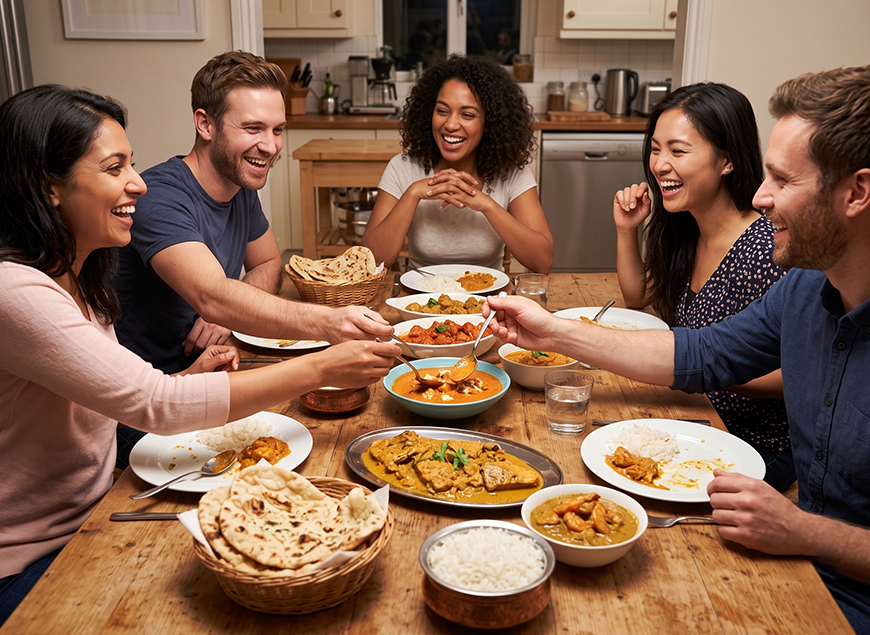
Hazel had been trying to get the six of them into the same room for nearly a year.
Someone was always traveling. Someone had a deadline. Someone had promised to come and then remembered a cousin’s birthday. So when the group chat finally produced a Friday night that worked for everyone, Hazel typed, “My place. Seven-thirty. And nobody is allowed to cancel unless there is an actual emergency.”
Then came the harder question: what was she going to feed them?
She could have ordered pizza. She could have made pasta. Both were safe choices. But this was the first time the old college group had been together in years. Safe seemed a little disappointing.
Instead, Hazel decided that dinner itself should give them something to talk about. Thus, Indian food was what she decided upon.
Her plan was simple: five non-vegetarian dishes, each carrying a different story, set out together with hot rice, naan and enough plates for everyone to keep going back for “just one more spoonful.”
By seven-thirty, her kitchen smelled nothing like an average Friday night.
Start Small, Then Let the Table Take Over
Before the main dishes appeared, Hazel put out a few Indian appetizers for everyone to pick at while coats were being thrown over chairs and old stories were already beginning.
There is a reason Indian appetizers work so well when people gather. Small bites can carry a surprising amount of flavor: toasted spices, chili, ginger, tangy chutneys, herbs, and crisp textures. They wake up the appetite without telling you too much about what is coming next.
“Are we supposed to be pacing ourselves?” Eric asked.
“Yes,” Hazel said.
Nobody listened.
Soon, she brought out the first bowl.
First Stop: A Korma with a Much Older Story
Chicken Korma looked quiet beside some of the brighter curries on the table. Its creamy cashew gravy gave little warning of the history behind it.
Korma, or qorma, has deep ties to the royal cooking of Mughal India. Food historians trace the dish to a Persian-influenced style of braising meat, which took on Indian ingredients such as yogurt, spices, almonds, and fried onions in Mughal kitchens. Even the name refers to a cooking method built around braising followed by slow cooking.
“So basically,” Mia said after her first bite, “this tastes like somebody’s grandmother spent six hours making it.”
Hazel smiled. “I am taking that compliment on behalf of the microwave.”
That was the beauty of the evening. These were ready-to-eat dishes, but the stories behind them belonged to centuries of culinary heritage.
The Chicken Korma was mild, rich, and nutty, a good beginning before the table moved toward bolder flavors.
And then Hazel uncovered the Butter Chicken.
There was an immediate silence.
The good kind.
From Delhi, with Plenty of Butter
Few crowd-pleasers need as little introduction as Butter Chicken.
Its modern history is closely tied to Moti Mahal in Delhi, opened after Partition by men who had come from Peshawar. One widely told account says leftover tandoori chicken was placed into a tomato-based gravy enriched with butter and cream so the meat would remain moist. Exactly who deserves individual credit is still debated, but Moti Mahal and Delhi sit firmly at the center of the dish’s story.
Hazel barely got through the story before Ryan tore off another piece of naan.
“I support whoever added the butter,” he said.
Fair enough.
There was something familiar about the dish even to the friends who had eaten relatively little Indian cuisine before that night. The smoky chicken, tomato, butter, and cream came together in a way that felt rich without being intimidating.
For Hazel, that was part of what made the meal interesting. Traditional Indian food was not one single flavor profile, one degree of heat or one kind of curry. The table was only halfway full, and that was already obvious.
The Curry with Two Passports
Chicken Tikka Masala brought the night’s first argument.
“Indian,” Eric said confidently.
“British,” Mia replied.
Hazel laughed. “Both of you may have a point.”
The exact birthplace of Chicken Tikka Masala remains debated. One famous account credits Glasgow chef Ali Ahmed Aslam, who said that in the 1970s he added a creamy tomato sauce to chicken tikka after a customer complained that the meat was too dry. Food historians, however, point out that the building blocks of the dish, tikka, yogurt, cream, spices, and similar gravies already had long histories in South Asian cooking. National Geographic describes its identity as one that can reasonably be seen as shared.
That story felt particularly at home around Hazel’s American dinner table.
Recipes travel with people. They change in new cities, meet new ingredients, and adjust to new tastes. Sometimes the story of a dish becomes almost as interesting as the dish itself.
The Chicken Tikka Masala disappeared quickly.
The debate did not.
Then the Table Reached the Coast
Hazel brought out the Fish Malabar next, and the dinner changed direction.
The creamy coconut gravy belonged to another part of India altogether: the Malabar region of Kerala, along the country’s southwestern coast. Malabar fish curry traditionally draws much of its character from coconut, tamarind and curry leaves, ingredients closely associated with the cooking of the region.
The fish was tender, while the coconut softened the spices and tamarind brought a gentle sour note through the richness.
“This doesn’t taste anything like the first three,” Ryan said.
“Exactly,” Hazel replied.
That was the point.
Talking about authentic Indian cuisine as though it were one style of cooking misses much of the fun. Geography changes the pantry. Climate changes what grows. Coastlines bring seafood into everyday cooking. Communities, trade routes and migration leave their own marks.
One meal can hold an enormous, diverse range of tastes.
And Hazel still had Goa waiting.
Goa Gets the Last Word
The Goan Shrimp Curry arrived with rice and very little room left on anybody’s plate.
Goan cooking has been shaped by both its coastal setting and centuries of cultural exchange. Coconut is central to many Goan curries, while souring ingredients such as kokum or tamarind bring brightness. Goa also played an important role in one ingredient now impossible to imagine Indian cooking without: chili peppers. The Portuguese brought chilies to India through Goa, where they had taken root by the 16th century before spreading into cooking across the country.
Bombay Kitchen’s Goan Shrimp Curry keeps that coastal character at its center, with marinated shrimp in a spiced coconut gravy.
By then, nobody was discussing whether they were full.
They were swapping plates instead.
Korma beside Goan Shrimp Curry. Fish Malabar with a little leftover naan. One final spoonful of Butter Chicken that three people claimed simultaneously.
Five dishes had shown five very different sides of a regional cuisine story stretching across courts, cities, coastlines and even continents.
The Best Part Wasn’t the Menu
Much later, the serving bowls were nearly empty, and everyone was still sitting around the table.
The conversation had moved from college memories to first jobs, bad apartments, parents getting older, children, relationships, and all the years during which “we should get together soon” had somehow kept meaning not quite yet.
Hazel looked around and realized that what she had planned as an easy dinner party had become something else.
Not because dinner had been complicated. It hadn’t.
It worked because each bowl gave the group somewhere new to go. A Mughal cooking tradition led to a story about someone’s childhood. Delhi led to an argument about favorite restaurants. Goa brought up a long-forgotten vacation. Chicken Tikka Masala started a debate that was probably going to continue in the group chat the next morning.
That is what special meals sometimes do. They leave behind more than empty plates. They become part of the unforgettable stories people tell the next time they finally manage to get everyone together.
What could have been an ordinary dinner became a small cultural experience, one bowl at a time.
And Hazel had already decided what the group was doing next month.
Nobody was allowed to wait another year.
Bring the Stories Home with Bombay Kitchen
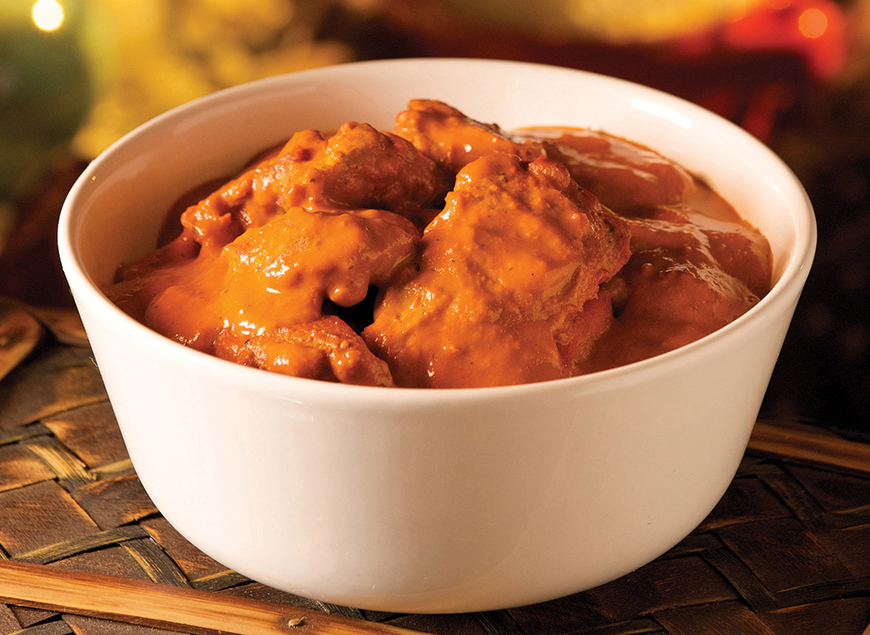
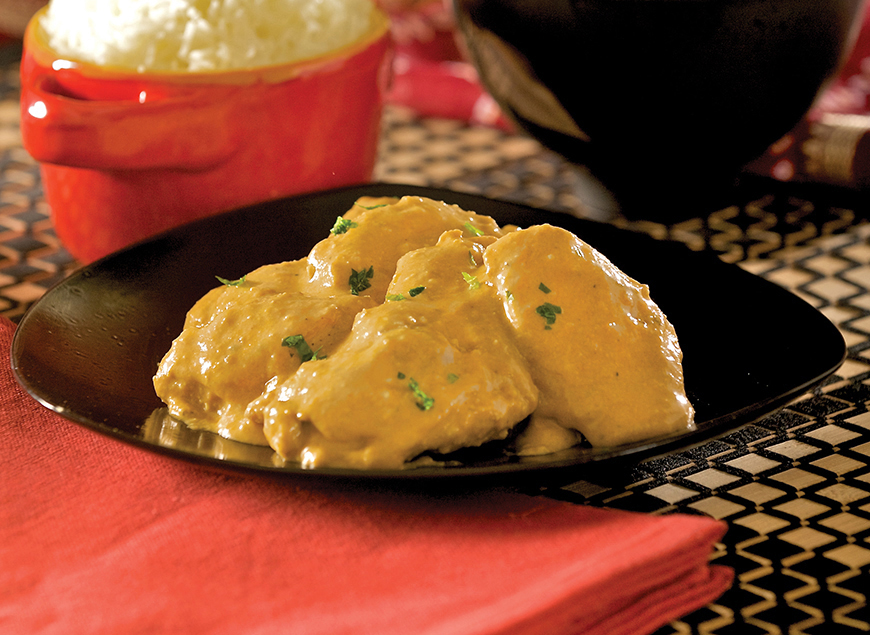
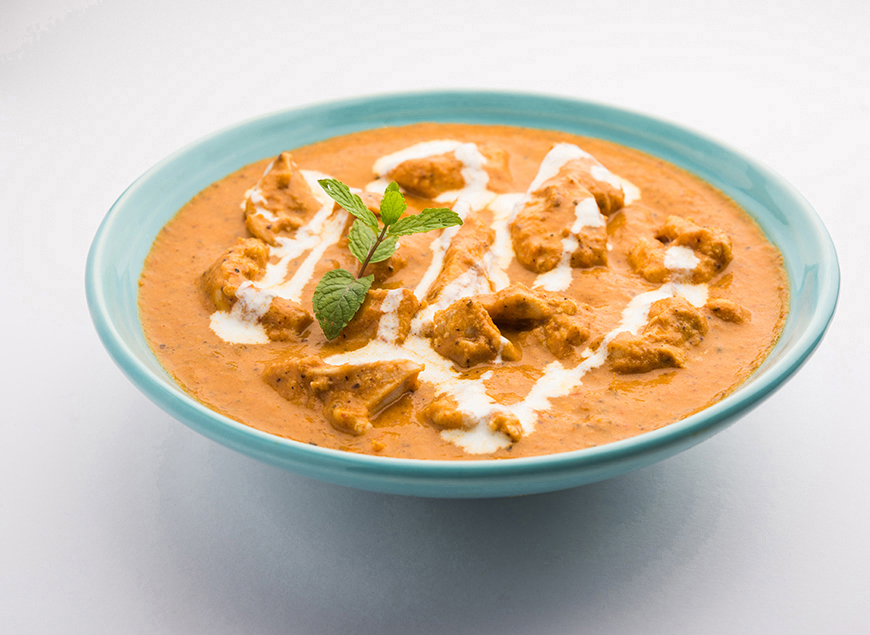
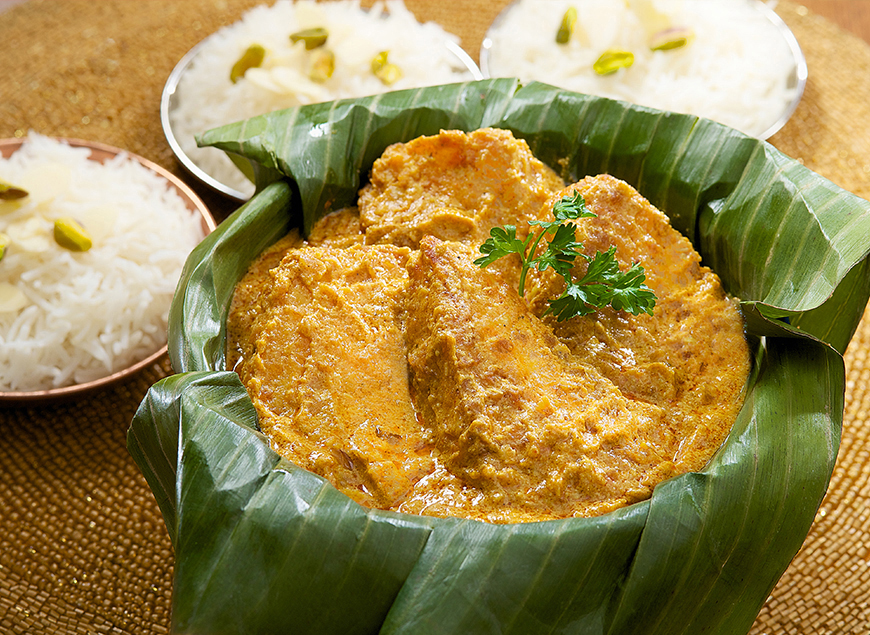
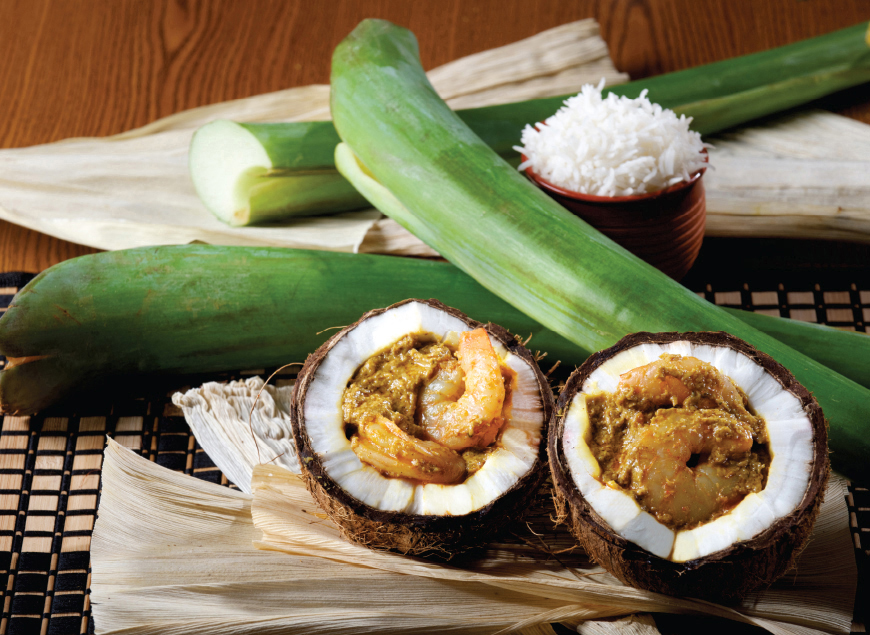
You do not need an entire afternoon in the kitchen to put a table like Hazel’s together. Bombay Kitchen offers ready-to-eat favorites including Chicken Tikka Masala, Chicken Korma, Butter Chicken, Fish Malabar and Goan Shrimp Curry, bringing the diverse flavors of Indian cooking to homes across the USA.
Pick up your favorites from a grocery store or Bombay Kitchen outlet near you, heat, serve, and make room around the table. Because sometimes the best dinners begin with good food and end with everyone staying much later than they planned.